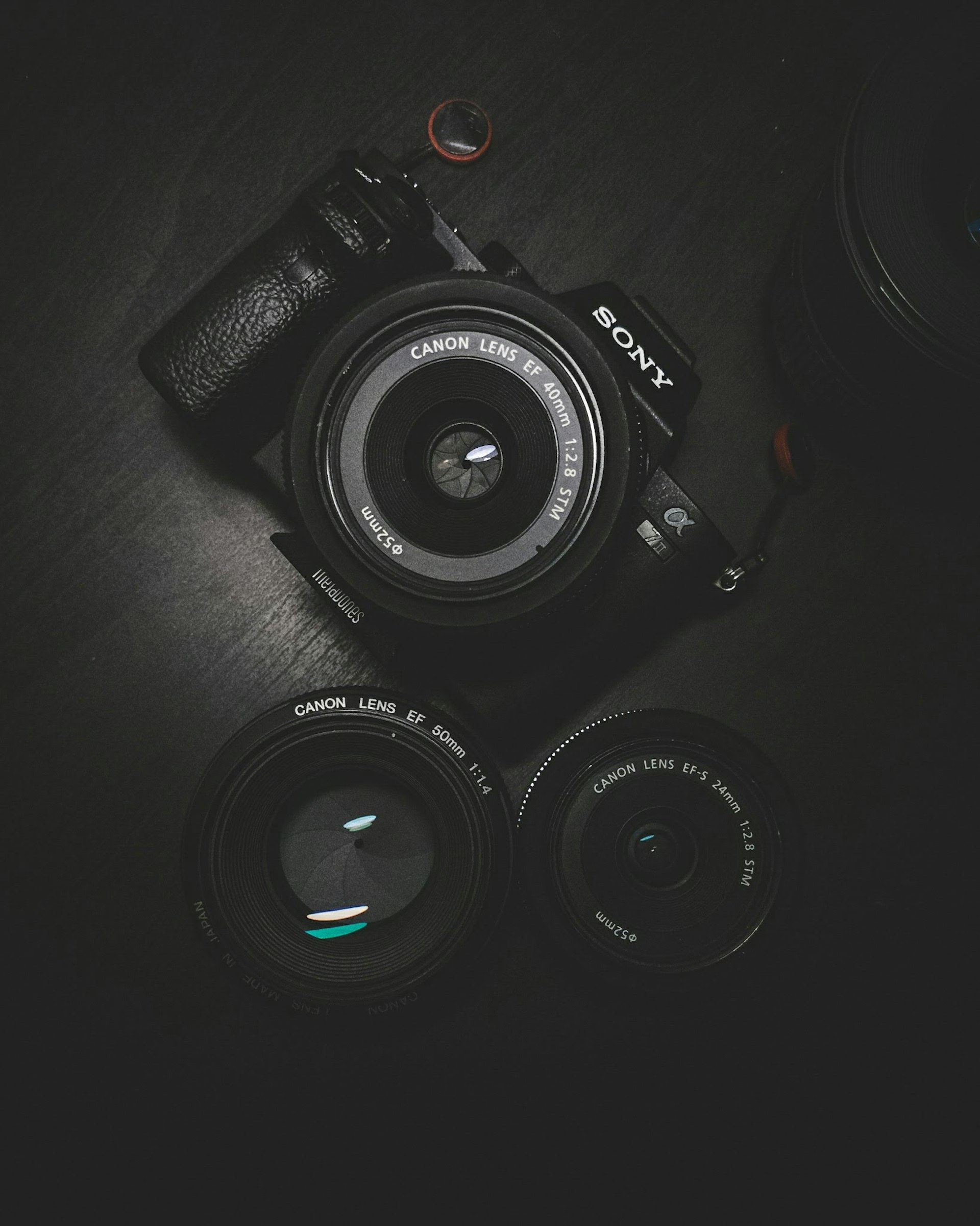
Photography is essentially "painting with light." To paint effectively, you need to control how much light reaches your canvas (the sensor). The Exposure Triangle is the fundamental concept that explains how Aperture, Shutter Speed, and ISO interact to create an image.
1. Aperture (The Eye)
Aperture refers to the opening in your lens, similar to the pupil of an eye. It is measured in f-stops (e.g., f/1.8, f/5.6, f/16).
- Low f-number (f/1.8): Wide opening. Lets in lots of light. Creates a blurry background (shallow depth of field). Great for portraits.
- High f-number (f/16): Narrow opening. Lets in less light. Keeps everything in focus (deep depth of field). Great for landscapes.
2. Shutter Speed (The Curtain)
Shutter speed is the length of time the camera's shutter remains open to expose light to the sensor. It is measured in seconds or fractions of a second (e.g., 1/1000, 1/60, 2").
- Fast Shutter (1/1000s): Freezes motion. Ideal for sports or wildlife.
- Slow Shutter (1/30s or slower): Blurs motion. Used for waterfalls or creative light trails. Requires a tripod to avoid camera shake.
3. ISO (The Sensitivity)
ISO measures the sensitivity of the image sensor to light.
- Low ISO (100-400): Low sensitivity. Produces the cleanest, highest quality images. Use in bright conditions.
- High ISO (1600+): High sensitivity. Allows you to shoot in the dark but introduces "noise" or grain to the image.
Putting It All Together
These three elements work in a balancing act. If you change one, you must adjust another to maintain the same exposure.
Example: You are shooting a portrait and want a blurry background, so you open your aperture to f/1.8. This lets in a lot of light. To prevent the image from being too bright (overexposed), you must either speed up your shutter speed (letting in light for less time) or lower your ISO (making the sensor less sensitive).
Exercise
Switch your camera to Manual Mode (M). Set your ISO to 100. Try to take a photo of the same object with three different aperture settings (f/2.8, f/5.6, f/11), adjusting your shutter speed each time to keep the exposure meter in the center. Observe how the background blur changes.